You are currently working on UAT 

What does the "character-width difference penalty" do?

Hi there,

I recently noticed the appearance of a character-width penalty for Asian source languages.

Checkbox labeled 'Get matches for character-width differences (Asian source languages)' followed by a field labeled 'Character-width difference penalty' with a value of 1.

I tried to search the Studio documentation and release notes for info about what this does, but can't find anything.

Would anybody be able to explain what this penalty does and when best (not) to use it?

Thanks, Neeltje


Generated Image Alt-Text
[edited by: Trados AI at 5:45 PM (GMT 0) on 28 Feb 2024]

emoji
Parents
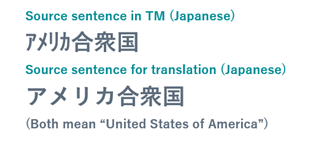
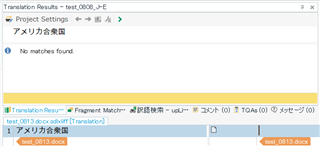
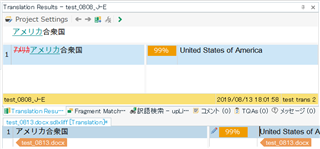
  • Studio was enhanced a while ago by improving stemming for Western languages and also by making improvements to the recognition of halfwidth and fullwidth characters (Japanese particularly).  With this enhancement it became important to be able to identify, or penalise TM matches that had a different character width to the source.

    I can only hazard a guess as to why this would be important as translation into a European target language for example would probably not care since the character widths would not apply for single byte languages.  But if you were translating into another double-byte language then it could.

    Paul Filkin | RWS

    Design your own training!
    You've done the courses and still need to go a little further, or still not clear? 
    Tell us what you need in our Community Solutions Hub

Reply
  • Studio was enhanced a while ago by improving stemming for Western languages and also by making improvements to the recognition of halfwidth and fullwidth characters (Japanese particularly).  With this enhancement it became important to be able to identify, or penalise TM matches that had a different character width to the source.

    I can only hazard a guess as to why this would be important as translation into a European target language for example would probably not care since the character widths would not apply for single byte languages.  But if you were translating into another double-byte language then it could.

    Paul Filkin | RWS

    Design your own training!
    You've done the courses and still need to go a little further, or still not clear? 
    Tell us what you need in our Community Solutions Hub

Children